Beyond the Headlines: Understanding Korea Beyond K-Pop
When people around the world think about Korea today, images of K-pop concerts, award-winning films, Korean dramas, cutting-edge technology, and vibrant city skylines often come to mind.
Yet one question continues to surface whenever I speak with people who have never visited Korea.
“How did this happen?”
How did a country located on only a small peninsula in East Asia become one of the world’s most influential cultural forces?
For many people, Korea’s rise appears almost sudden—a remarkable success story that unfolded within only a few decades.
At first glance, that conclusion seems reasonable.
South Korea emerged from the devastation of the Korean War to become one of the world’s leading economies while simultaneously capturing global attention through music, cinema, cuisine, beauty, technology, and digital innovation.
To outside observers, it can feel like history accelerated unusually fast.
However, that explanation tells only the final chapter of a much longer story.
The Korea admired today was not created overnight.
Long before the world discovered BTS, Parasite, Squid Game, or Korean skincare, generations of Koreans had already been building the cultural foundations that quietly shaped the nation’s character.
Those foundations were not designed to create global popularity.
They developed naturally over centuries as ordinary people learned how to survive wars, rebuild communities, educate future generations, preserve family relationships, and adapt to constant change.
Modern Korea is therefore best understood not as an unexpected miracle, but as the visible outcome of invisible cultural values that have been evolving for more than a thousand years.
This article serves as an introduction to those foundations.
Rather than examining each cultural value in depth, it offers a broader perspective—a roadmap for understanding how history, society, and everyday life became interconnected to produce what the world now recognizes as Korean soft power.
Throughout this series, each cultural foundation will be explored separately so readers can discover not only what makes Korea unique, but also why those characteristics continue to influence Korean society today.
Korea’s Global Influence Began Long Before the Korean Wave
The phrase “Korean Wave” usually refers to the worldwide popularity of Korean entertainment beginning in the late twentieth century.
While this modern phenomenon is extraordinary, it represents only one chapter in Korea’s much longer cultural story.
Historical records suggest that Korean culture attracted admiration far beyond its borders centuries before streaming platforms and social media existed.
One well-known example comes from 1123, when Xu Jing, an envoy from China’s Song Dynasty, visited the Goryeo Kingdom.
His travel record, Goryeodogyeong (The Illustrated Account of Goryeo), described a society distinguished by refined craftsmanship, sophisticated customs, and remarkable artistic achievement.
Several generations later, during the Yuan Dynasty, elements of Korean fashion, hairstyles, ceramics, and lifestyle became fashionable among members of the imperial court.
Historical documents even referred to this trend as Goryeoyang—literally, “Goryeo Style.”
Although very different from today’s K-pop or Korean cinema, this historical episode reveals something important.
Korean culture has attracted international curiosity before.
Today’s Korean Wave is therefore not the beginning of Korea’s cultural influence.
Rather, it represents the latest expression of a tradition that has repeatedly reinvented itself throughout history.
Understanding this historical continuity allows us to see modern Korea differently.
Instead of asking,
“Why did Korea suddenly become influential?”
we begin asking a more meaningful question:
“What long-standing cultural values allowed Korea to adapt so successfully to every new era?”
The Invisible Foundations That Built Modern Korea
Many visitors first notice Korea’s impressive infrastructure.
They see efficient transportation, clean public spaces, advanced technology, high-speed internet, and cities that appear to operate with remarkable precision.
These visible achievements are impressive.
But they are not the foundation.
Behind them lies a network of cultural values that developed over generations and continue to influence everyday life.
Among these are:
- respect across generations
- enduring personal relationships
- community responsibility
- commitment to education
- remarkable adaptability
- an unusually strong willingness to embrace change
None of these ideas can fully explain Korea on its own.
Together, however, they form an interconnected cultural framework that has helped Korean society remain resilient through periods of invasion, colonization, war, rapid industrialization, democratization, and globalization.
Each of these themes deserves its own discussion.
For that reason, the following articles in this series explore these cultural foundations individually, allowing readers to understand not only their historical origins but also how they continue to shape everyday experiences in modern Korea.
More Than Individual Values: A Cultural System That Works Together
One common misunderstanding about Korea is the belief that its remarkable achievements can be explained by a single cultural characteristic.
Some people point to hard work.
Others emphasize education.
Still others focus on technology or the global popularity of K-pop.
In reality, none of these tells the whole story.
Korea’s modern development did not emerge from one defining value. It grew from the interaction of many cultural traditions that reinforced one another over generations.
Rather than functioning independently, these traditions created a cultural ecosystem.
Respect for learning encouraged education.
Strong interpersonal relationships fostered trust.
Community responsibility made cooperation possible.
Adaptability allowed society to respond quickly to new challenges.
Over time, these values supported one another, creating an environment where innovation could flourish without completely abandoning social cohesion.
This interconnectedness is one of the least visible—but perhaps most important—characteristics of modern Korea.
Looking Beyond Statistics
International reports often describe Korea using numbers.
High internet speeds.
World-leading semiconductor production.
Exceptional educational achievement.
Global entertainment exports.
These statistics are impressive.
But numbers rarely explain why these accomplishments became possible.
To understand Korea only through economic indicators is a little like admiring the branches of a tree without noticing its roots.
The visible achievements belong to the present.
The invisible values were cultivated over centuries.
Understanding both provides a more complete picture of Korean society.
What Many Visitors Notice First
Many first-time visitors arrive expecting Korea to be defined mainly by technology.
Instead, they often remember something much simpler.
A restaurant owner who remembers them after only a few visits.
Neighbors quietly helping one another during difficult times.
Office colleagues staying together until everyone’s work is finished.
Parents making extraordinary sacrifices for their children’s future.
Volunteers gathering almost immediately after natural disasters.
None of these experiences appear in tourism advertisements.
Yet they often leave a deeper impression than famous landmarks.
These everyday moments reveal that modern Korea is supported not only by economic success but also by relationships, shared expectations, and social responsibility.
Understanding these ordinary experiences helps explain why Korean society often feels different from what visitors expected before arriving.
A Common Misunderstanding
Because Korea has developed so rapidly, many observers assume that modernization replaced tradition.
In many respects, the opposite is true.
Korea modernized while preserving many long-standing social values.
Traditional ideas have certainly evolved.
They continue to be debated, questioned, and adapted by younger generations.
Yet many of them remain surprisingly influential in everyday life.
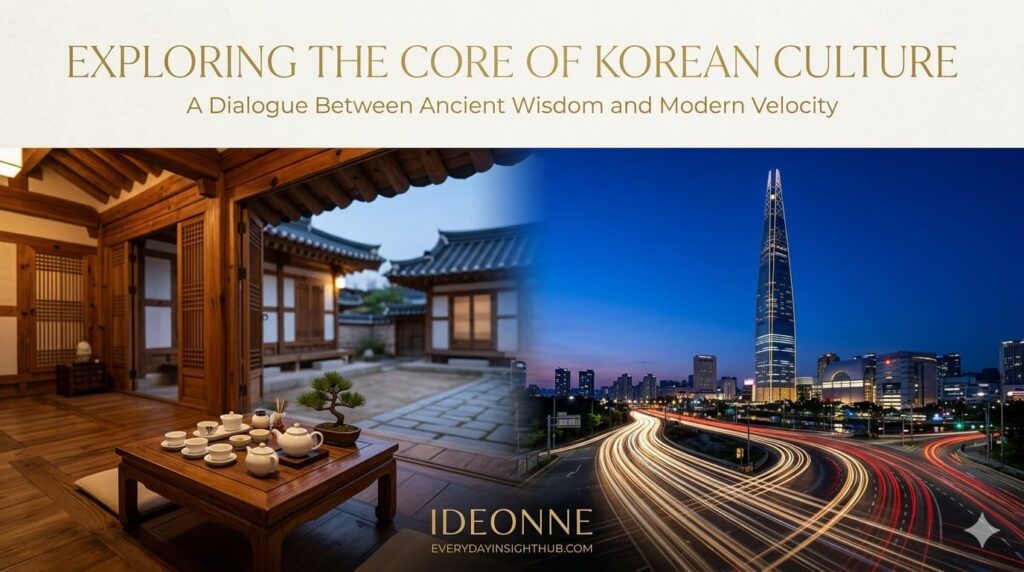
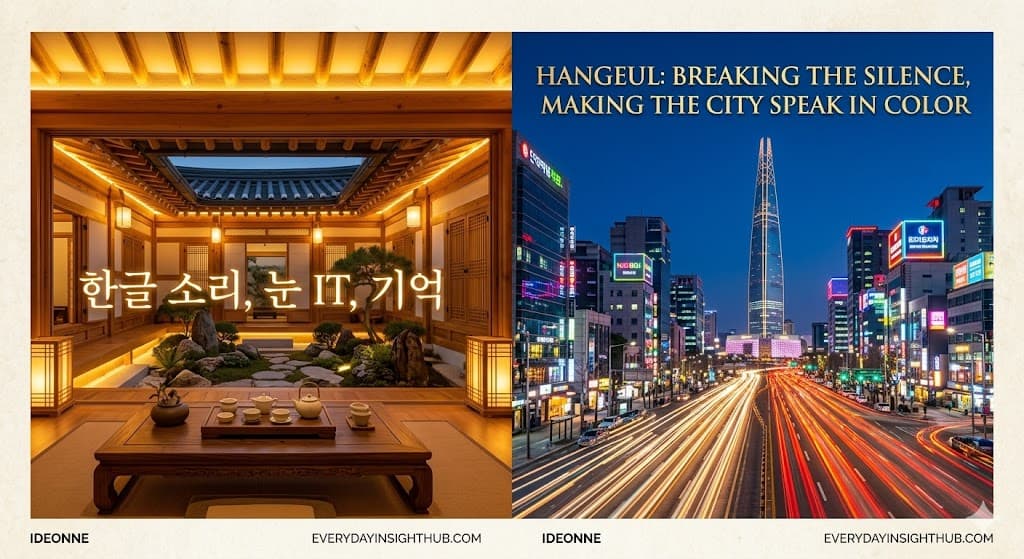
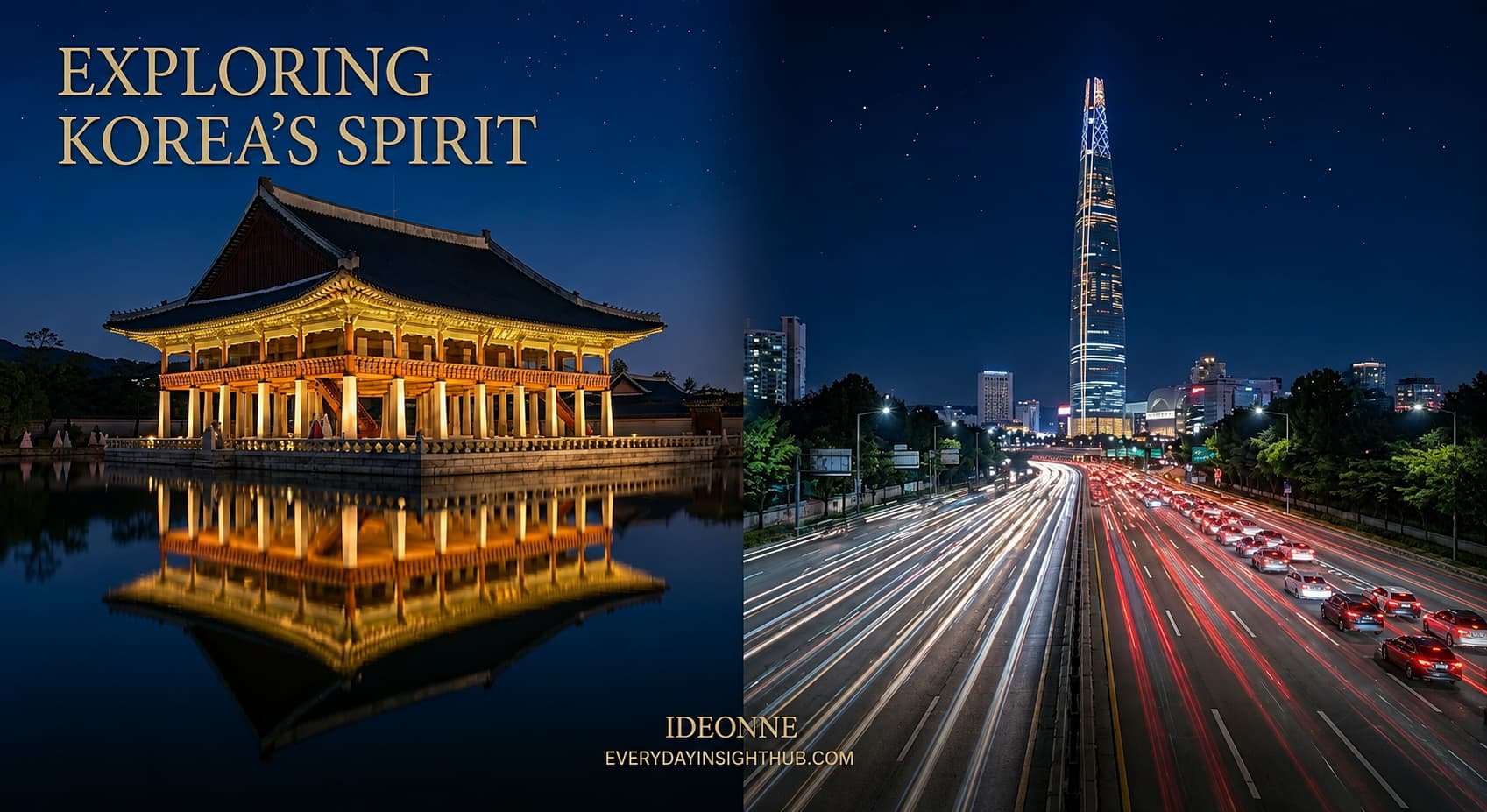
Modern skyscrapers stand beside centuries-old palaces.
Artificial intelligence companies operate in neighborhoods where traditional markets still thrive.
Digital convenience exists alongside customs that emphasize family relationships and respect between generations.
Rather than replacing the past, modern Korea often builds upon it.
This balance between continuity and change is one of the country’s defining characteristics.
Why This Matters
Understanding Korean culture is about far more than appreciating historical traditions.
It offers a different way of thinking about how societies evolve.
Around the world, many countries struggle with similar questions.
How can economic growth coexist with strong communities?
How can rapid innovation avoid weakening social trust?
How can modernization preserve cultural identity?
Korea does not offer perfect answers.
Like every society, it faces significant challenges.
Nevertheless, its historical experience provides valuable insights into how cultural values can influence national development over long periods of time.
For that reason, studying Korea is not simply about learning another country’s customs.
It is also an opportunity to reflect on broader questions about community, resilience, education, identity, and adaptation in an increasingly interconnected world.
Korea’s Story Is Still Being Written
Every generation tends to discover Korea through a different doorway.
Some first encounter Korea through music.
Others arrive because of films, television dramas, cuisine, beauty products, technology, or business.
These are often the beginning of curiosity—but they are rarely the end of understanding.
The more time people spend learning about Korea, the more they realize that today’s achievements cannot be separated from yesterday’s experiences.
Modern Korea was not built by technology alone.
Nor was it created solely through economic growth or global entertainment.
Its story is also one of resilience after war, continuous investment in education, strong family networks, community cooperation, and an extraordinary willingness to adapt while preserving cultural identity.
These elements do not explain every aspect of Korean society.
No single article ever could.
But together, they provide a broader perspective that helps us move beyond stereotypes and headlines.
Understanding Korea becomes less about memorizing facts and more about recognizing how history, culture, and everyday life continue to shape one another.
Why This Series Exists
Many articles about Korea introduce individual customs or explain popular cultural trends.
Those resources are valuable.
However, they often examine each topic in isolation.
This series takes a different approach.
Instead of viewing Korean culture as a collection of unrelated traditions, it explores how history, language, values, and daily life connect to form a larger cultural landscape.
Each article focuses on one idea.
Together, they tell one story.
Rather than asking readers to memorize information, the goal is to help them understand the connections that make modern Korea both familiar and uniquely its own.
Whether you are planning your first visit, studying Korean, working with Korean colleagues, or simply curious about one of the world’s most dynamic societies, I hope these articles help you look beyond what is immediately visible.
Because the most influential parts of any culture are often the ones people notice last.
Where to Continue
If this article offered a broad overview, the next step is to explore the individual cultural foundations that continue to shape everyday life in Korea.
You may wish to continue with:
- What Is Jeong? Korea’s Invisible Language of Human Connection
- Understanding Hyo: The Korean Way of Expressing Respect and Care Across Generations
- Community Before Self: The Collective Spirit of Korea
- Why Education Became Korea’s Greatest National Investment
- Ppalli-Ppalli: The Mindset Behind Korea’s Rapid Development
- Learning Hangul: Understanding Korea Through Its Alphabet
Each article examines one cultural idea in greater depth while showing how it connects to the larger story introduced here.
Final Reflection
Perhaps Korea’s greatest contribution to the modern world is not simply its music, technology, films, or economic success.
It is the reminder that lasting influence rarely appears overnight.
Behind every visible achievement lies a much longer story—one shaped by countless ordinary people, quiet traditions, difficult choices, and values passed from one generation to the next.
The Korean Wave may have introduced Korea to the world.
Understanding its cultural foundations allows us to appreciate why that wave continues to move forward.
And perhaps, in doing so, it also encourages us to look more carefully at the invisible cultural foundations within our own societies.
Author’s Note
This article is the opening chapter of IDEONNE’s Cultural & Linguistic Insight series. Rather than presenting Korean culture as isolated facts, the series explores the historical and cultural connections that continue to shape everyday life in modern Korea.l. Therefore, for now, it is entirely alright to catch your breath, let the momentum ease, and gently take a single step back.”